Roofing Underlayment Manufacturer
KOSITE supplies breathable roofing underlayment, also called a vapour-permeable roofing underlay or breather membrane, for pitched-roof assemblies. Confirm the selected grade, roof build-up and controlled TDS before specifying OEM rolls or export packing.
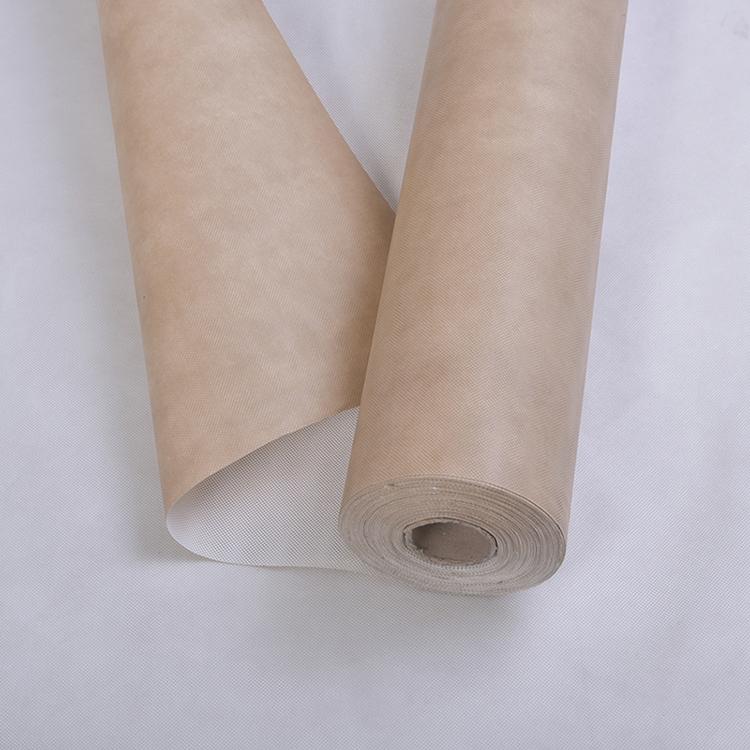
Controlled Membrane Grades and Technical Data
Three-layer PP nonwoven / breathable film / PP nonwoven. Standard roll: 1.50 m x 50 m (75 m²). Nominal basis weight tolerance: ±5%. The linked TDS defines the application, test methods, tolerances and limitations for each grade.
| Grade / nominal mass | Intended application | Water tightness | Sd maximum (m) | Tensile MD / transverse (N/50 mm) | Controlled source |
|---|---|---|---|---|---|
| 120 g/m² | Roof underlay | W1 | 0.015 | 189 / 137 ±15% Typical MD / CD; not guaranteed minima |
KOS-TDS-RM120-2026, Rev. 01 PDF |
| 130 g/m² | Roof underlay | W1 | 0.015 | 200 / 150 ±15% Typical MD / CD; not guaranteed minima |
KOS-TDS-RM130-2026, Rev. 01 PDF |
| 140 g/m² | Roof underlay | W1 | 0.015 | 220 / 160 ±15% Typical MD / CD; not guaranteed minima |
KOS-TDS-RM140-2026, Rev. 01 PDF |
| 160 g/m² | Roof underlay | W1 | 0.015 | 280 / 200 ±15% Typical MD / CD; not guaranteed minima |
KOS-TDS-RM160-2026, Rev. 01 PDF |
| 180 g/m² | Roof underlay | W1 | 0.015 | 315 / 225 ±15% Typical MD / CD; not guaranteed minima |
KOS-TDS-RM180-2026, Rev. 01 PDF |
Water tightness: EN 1928, Method A. Sd: EN ISO 12572. Tensile: EN 12311-2 for the wall grades; EN 12311-1 / EN 13859-1 for the roofing grades. Values from different test methods must not be treated as interchangeable. These TDS do not declare a reaction-to-fire classification.
A wall grade is not automatically a roof underlay, and a breathable underlay is not a vapour barrier. Confirm the current controlled revision and the approved assembly before ordering. Custom grades and roll formats require separate specification approval.
Roof Underlay Joint Tape and Sealing Accessories
Choose accessories for the actual membrane, substrate and joint. A seam tape, concealed-lap butyl tape and window flashing tape serve different details; none replaces the approved drainage and flashing design.
- Breather membrane joint tape and housewrap / WRB seam tape: for compatible membrane overlaps; select a separate approved flashing construction for window and door openings.
- Butyl membrane sealing tape: discuss double-sided concealed-lap tape or backed flashing construction for the intended interface.
- Vapor-permeable housewrap and wall WRB and roofing underlayment: confirm the selected grade and compatible accessory together.
For European and US private-label tape supply, send the destination market, application, membrane sample, tape width and length, quantity, label artwork and packaging requirements. Confirm available constructions, MOQ, lead time and applicable technical documents with the quotation.
Discuss an OEM membrane and accessory program or request tape samples and a specification-based quotation.
Where Breathable Roofing Underlayment Fits
- Used below the final roof covering as a secondary water-management layer for roof-deck protection and outward drying where the roof design permits.
- Suitable roll construction depends on the roof profile, slope, installation method and expected exposure before covering.
- GSM, roll format, surface, printing and export packing can be set for distributor, contractor and OEM programs.
How to Select Roofing Underlayment
- Breathable roofing underlayment must be selected as part of the roof build-up, not only by basis weight. Roof deck, covering profile, insulation position and temporary exposure affect the choice.
- Compare the controlled TDS values for water resistance and vapor permeability alongside tensile and tear strength, surface grip, roll handling and fastening method.
- Laps, edge details, penetrations and compatible tapes or flashings determine whether the installed underlayment remains continuous.
Roofing Underlayment Specification Checklist
- Confirm the roof build-up, roof slope, covering profile, insulation position and expected exposure before selecting a roll structure.
- Specify the required water resistance, vapor behavior, tensile strength, tear strength and surface-finish requirements.
- Set roll width, roll length, core size, printing, label and pallet or container-packing requirements.
- Review lap direction, fixing method, edge treatment, penetrations and compatible tape or flashing before installation.
- Confirm applicable product data, test references and destination-market requirements before production.
- Approve a sample before bulk supply, especially for private-label or project-specific programs.
Related Technical Resources
Use these application notes with the selected product data sheet and project specification.