Application Guide
Facade Membrane and Wall WRB Application Guide
A practical reference for facade and wall-envelope membrane continuity at cladding cavities, window openings and exterior-wall transitions.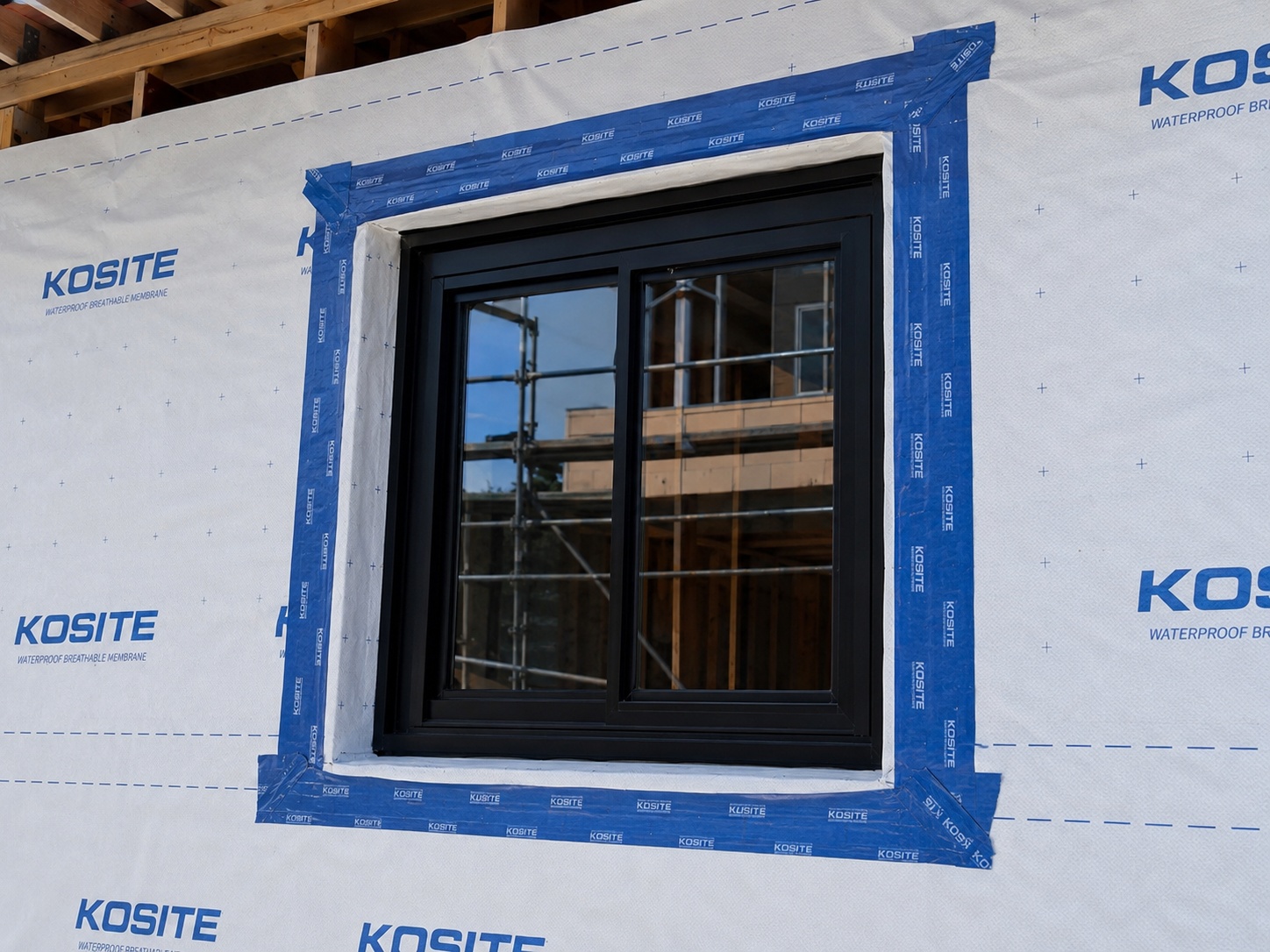
Key Points
Facade and exterior-wall membranes work behind the visible cladding. Their value depends on a continuous drainage and weather-protection layer at joints, openings and transitions. The installation image on this page shows KOSITE membrane integrated with flashing tape around a window opening.
- Confirm the cladding type, cavity design and exposure condition before choosing the membrane.
- Check water resistance, vapor permeability, UV allowance, strength and tape compatibility as one system.
- Keep membrane laps, window flashing, corners and penetrations continuous before cladding is closed.
1. System conditions to confirm
- Identify open-joint or closed-joint cladding, cavity depth and fixing method.
- Confirm expected construction exposure, required membrane color and any UV or fire-performance requirement.
- Review the wall build-up, insulation position and intended drainage path.
2. Window and transition details
- Integrate sill, side and head flashing with the membrane so water drains toward the exterior.
- Use compatible tape or flashing materials at window openings, corners, penetrations and repairs.
- Avoid reverse laps, open edges and unsupported membrane around fasteners.
3. Product and supply confirmation
- Review water resistance, vapor permeability, tensile strength, tear resistance and applicable exposure data.
- Confirm roll width, roll length, color, printed side, packing and required sample approval before production.